Design Process
Built In Three Acts.
01
Retail Mobile App — IA from Zero
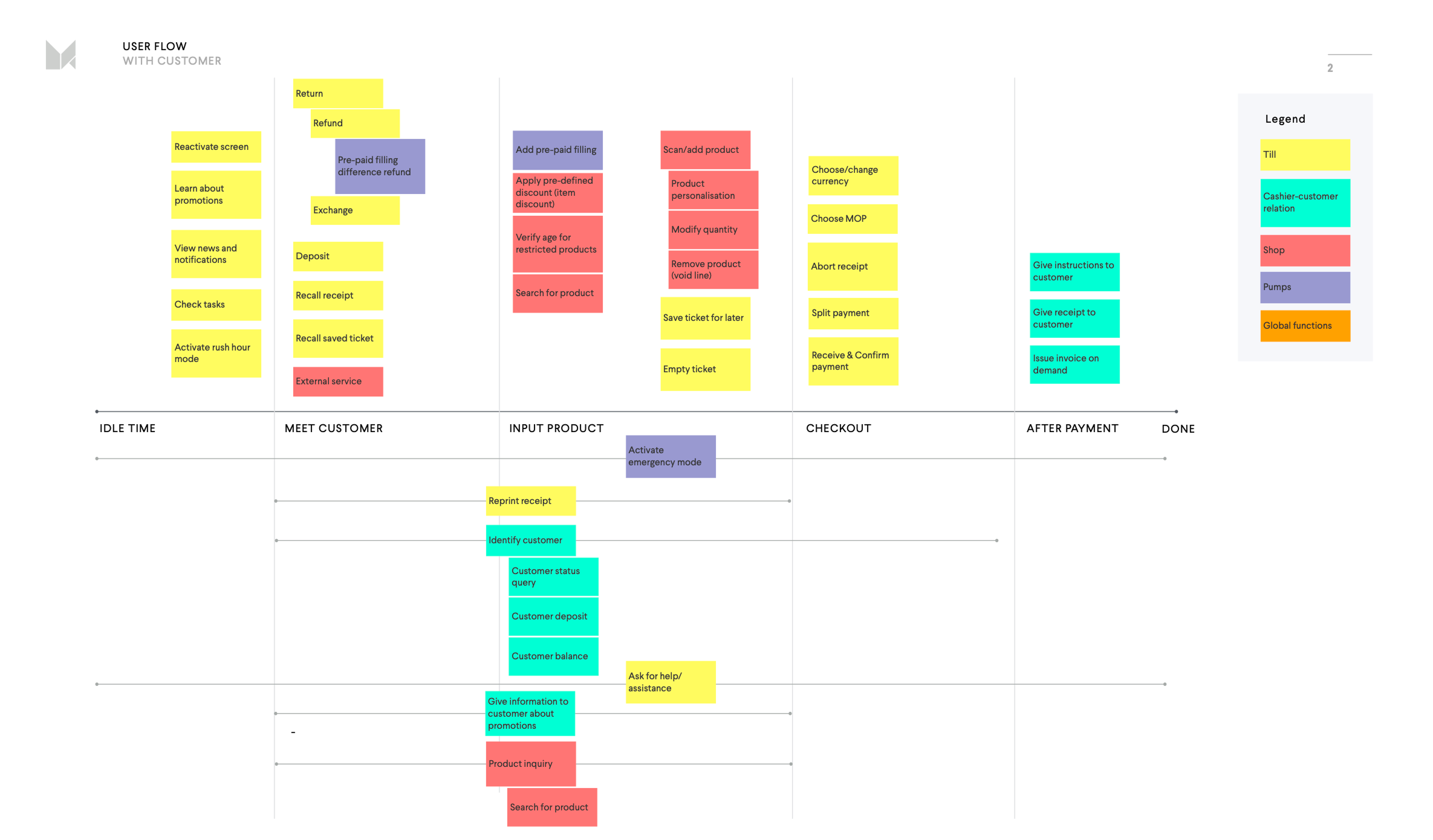
The project began with a blank page: no prior product, no inherited structure, no existing navigation pattern to adapt. The information architecture for the mobile store app was built entirely from first principles — mapping the store buyer's workflow, structuring the product catalogue, and designing a purchasing journey that matched how staff actually operated on the shop floor.
02
Cashier System — Translating To A New Context
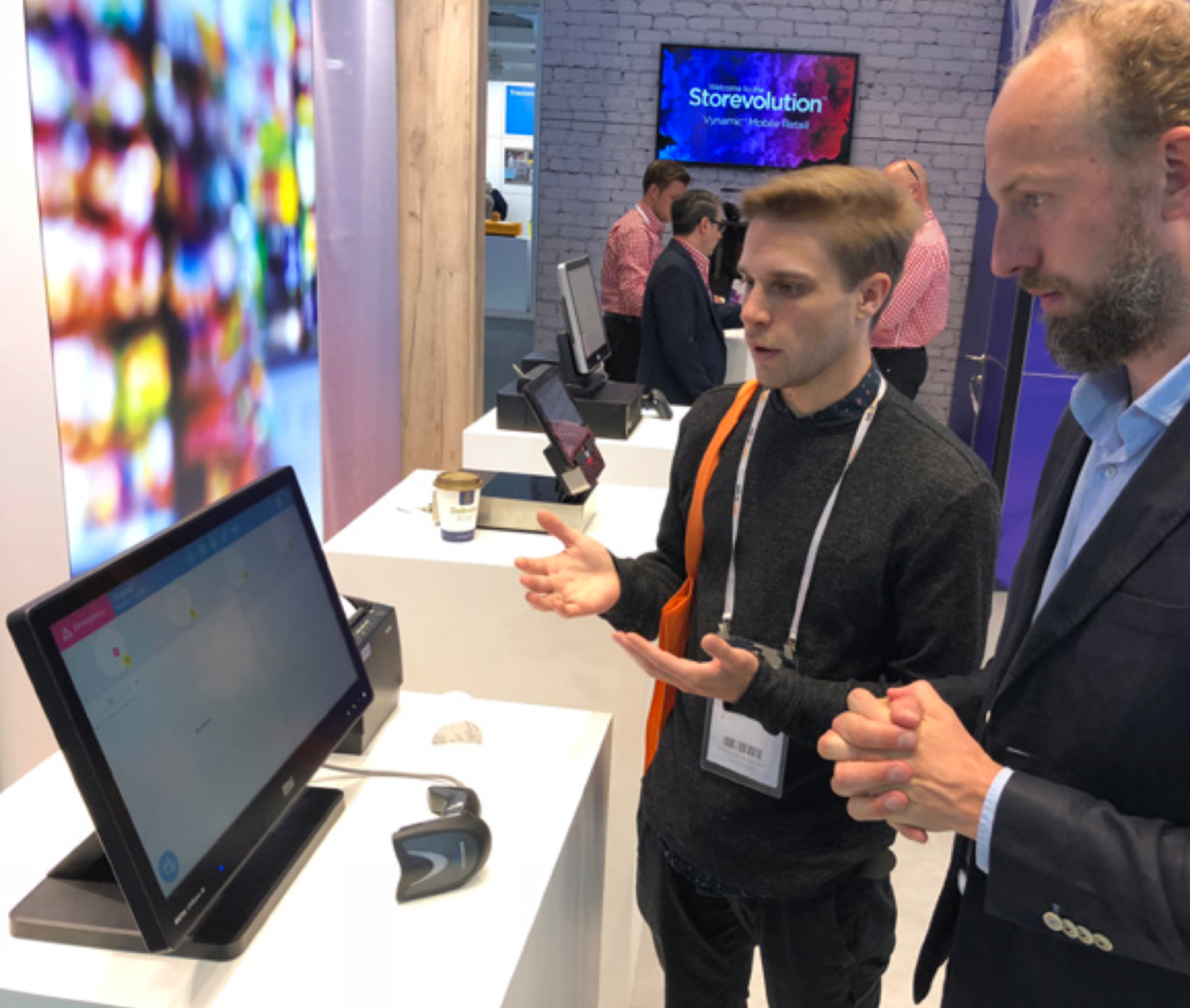
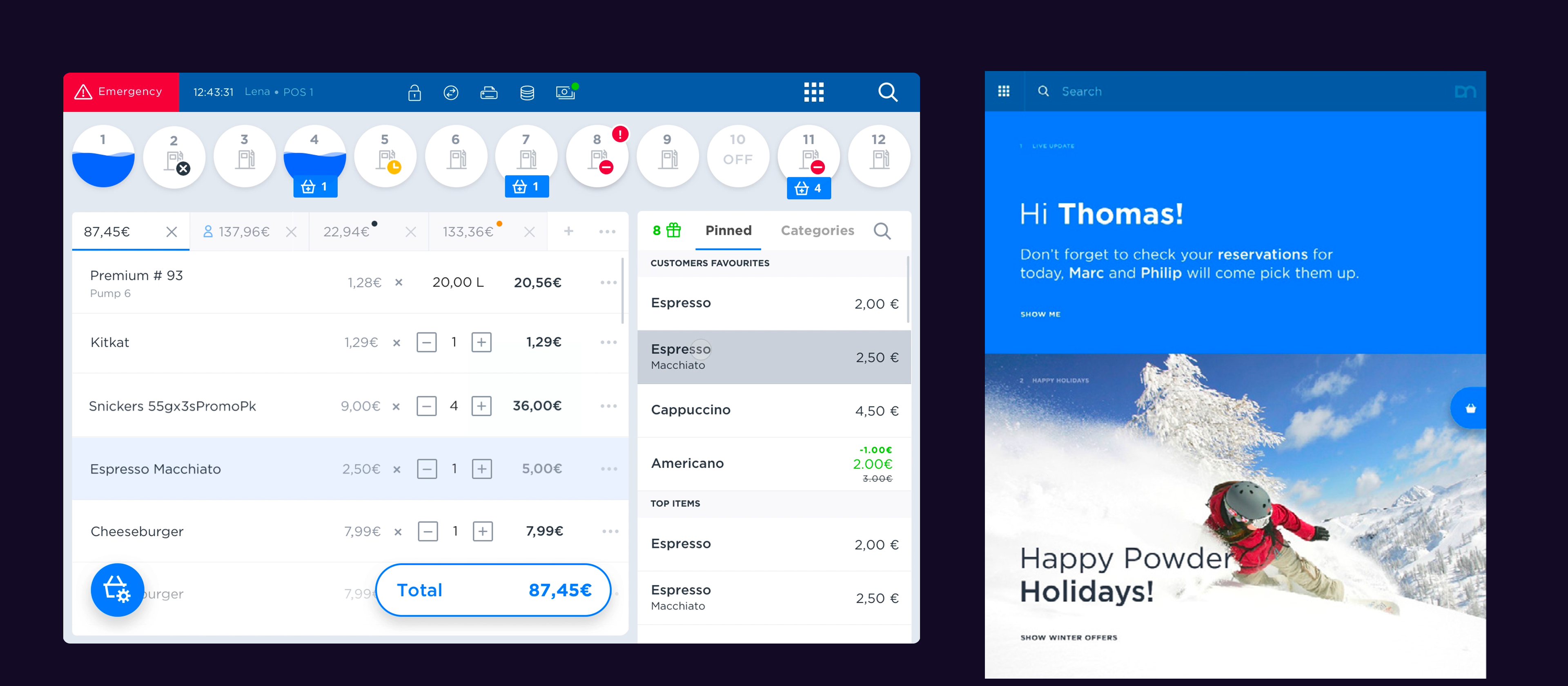
The design logic developed for the mobile app was then applied to the cashier system — a fundamentally different interface with different time pressures, different interaction patterns, and different user needs. The challenge was to preserve consistency without forcing a mobile paradigm onto a stationary POS context. The underlying IA principles travelled well; the surface-level UI was rethought from scratch.
03
Gas Station — The Third Context
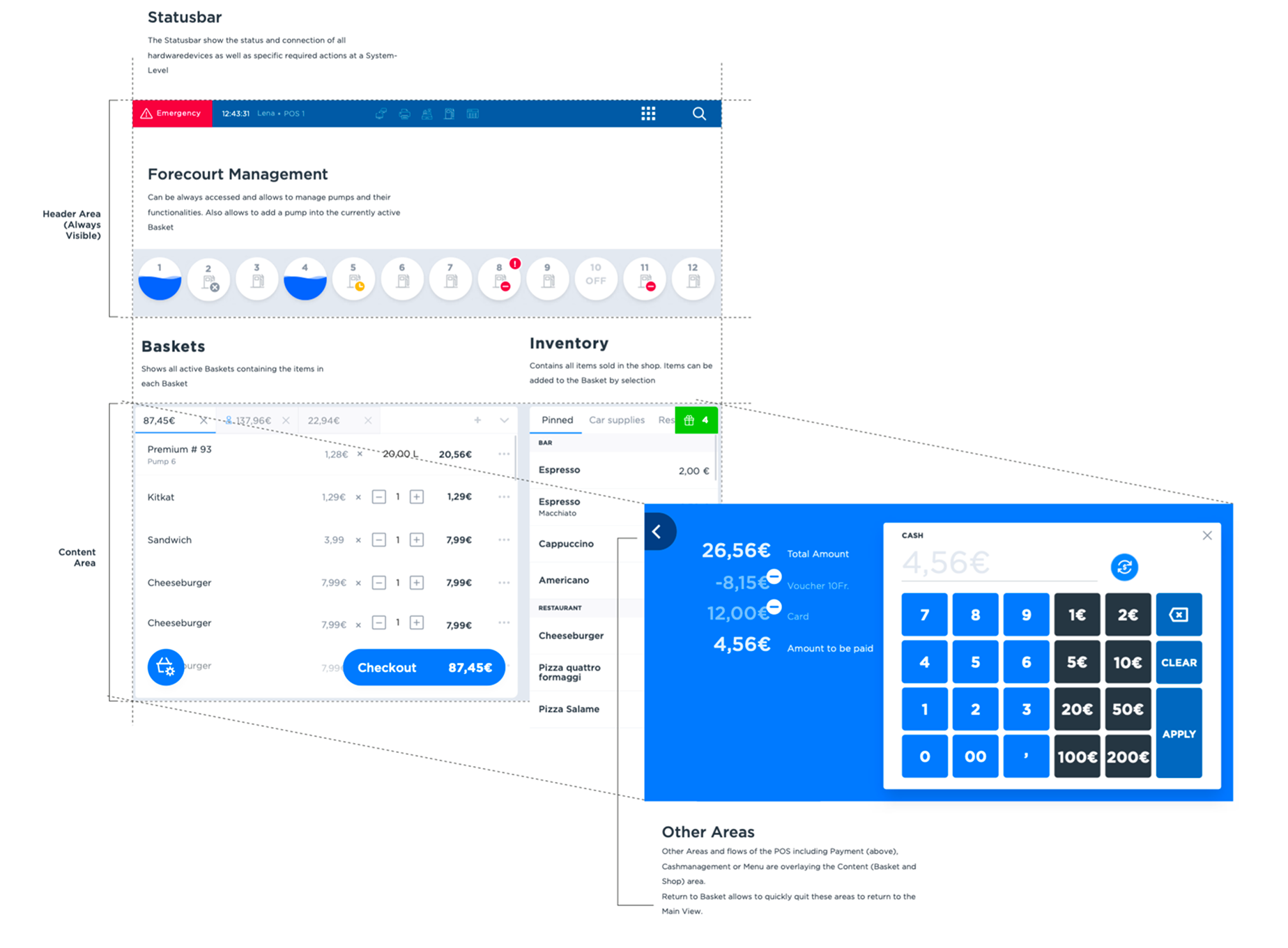
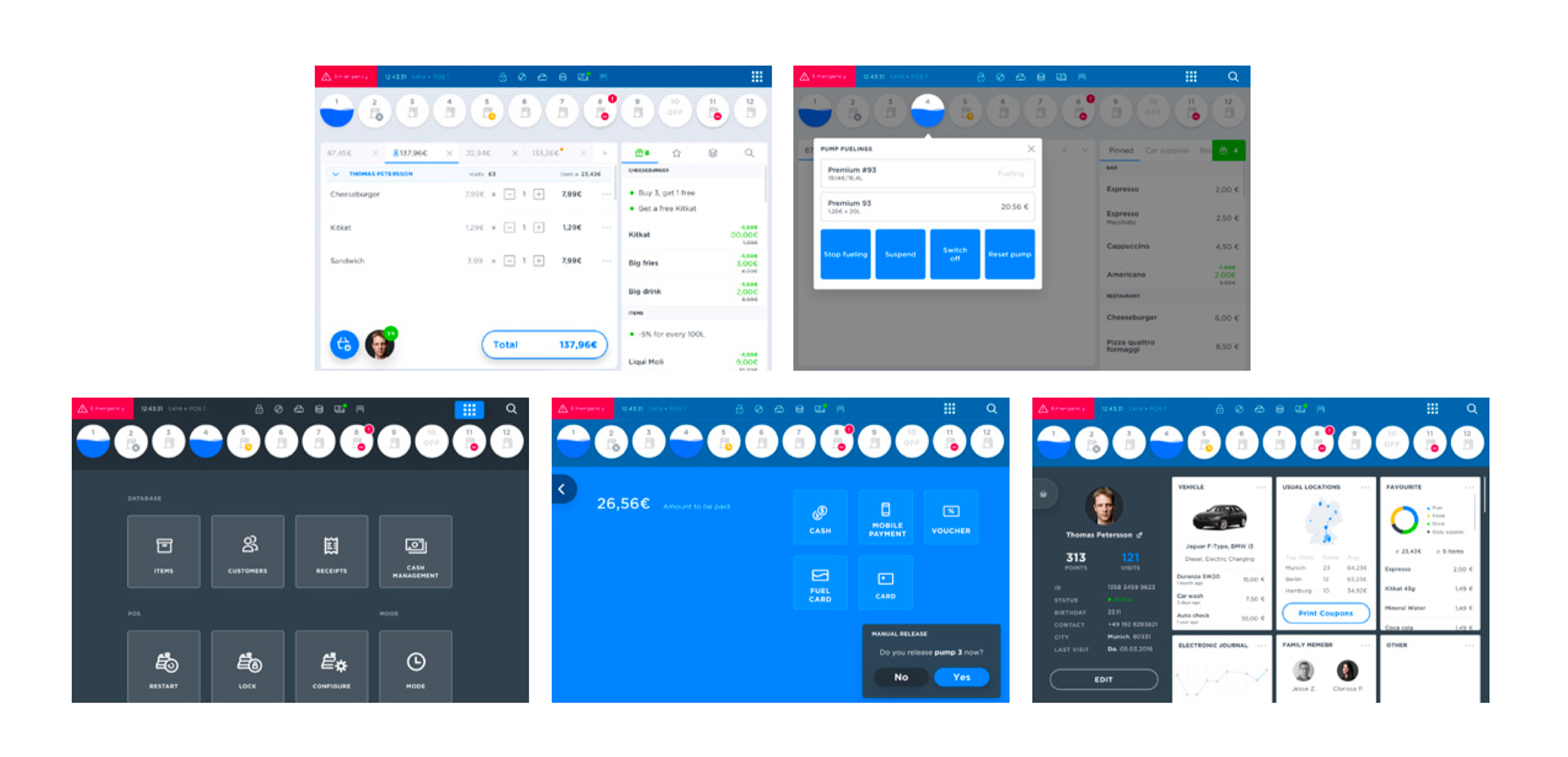
Bringing the retail experience to the gas station meant designing for an environment with even less margin for error. Staff are managing multiple systems simultaneously — forecourt pumps, in-store sales, payment flows — often under time pressure. The IA work here focused on keeping the most critical functions always visible, and adapting the navigation logic that had worked in the retail app to a much more operationally complex environment.
04
IA Documentation
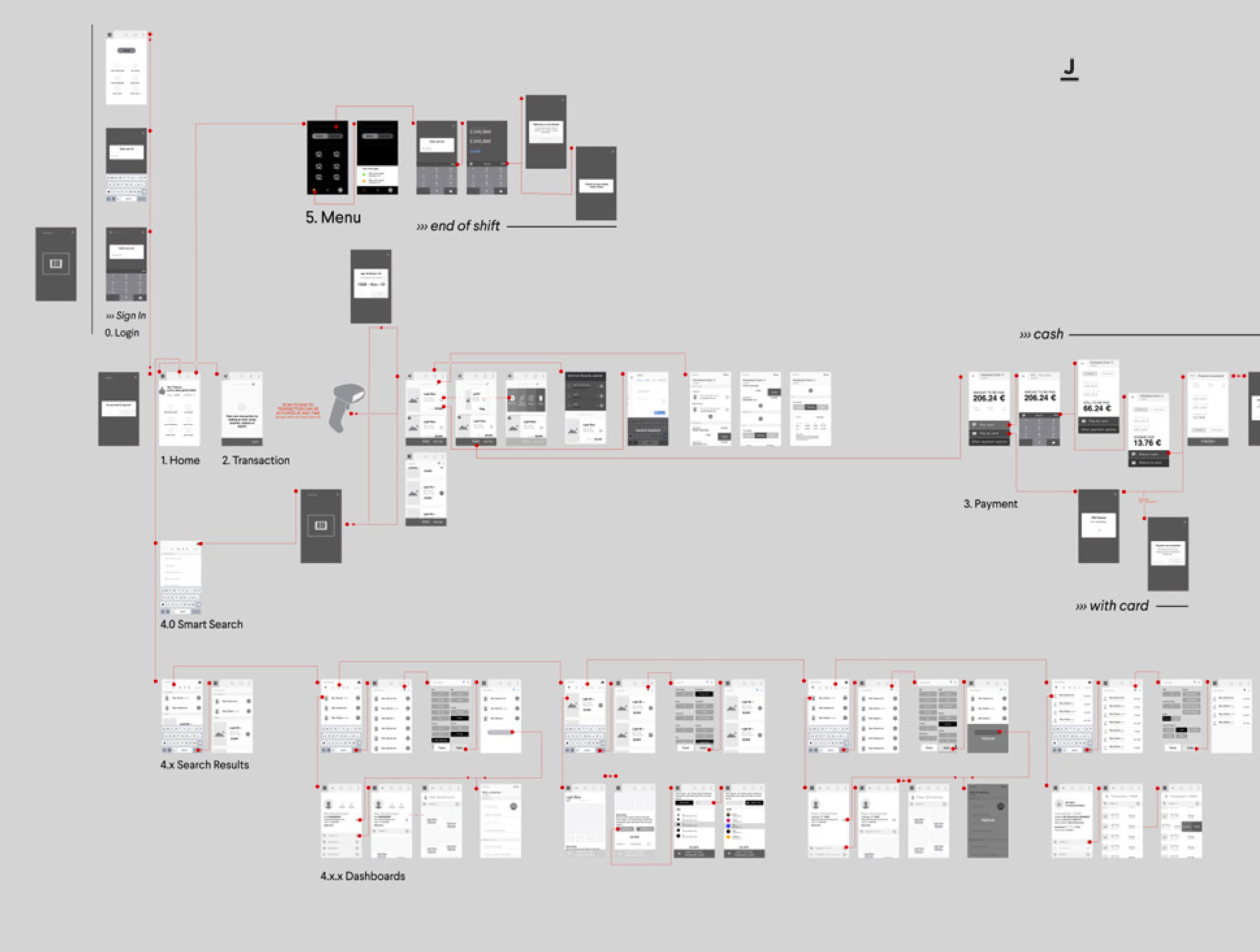
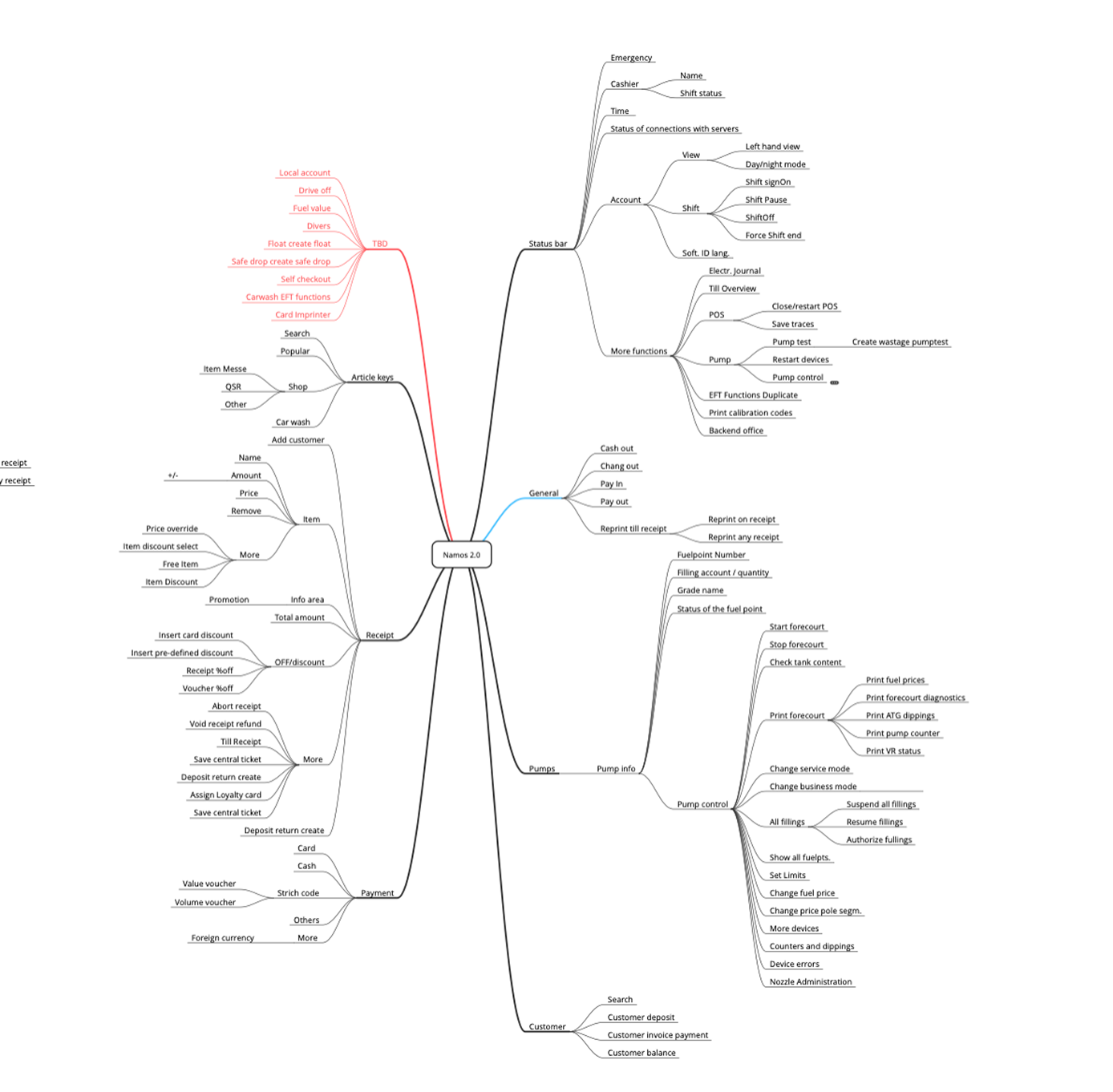
For both the mobile app and the gas station product, formal information architecture documentation was produced — flow diagrams, navigation maps, content hierarchies, and annotated screen logic. These documents served as the foundation for development handoff and as references for onboarding future team members to the product's structural rationale.
05
UI & Brand-Related UX Guidelines
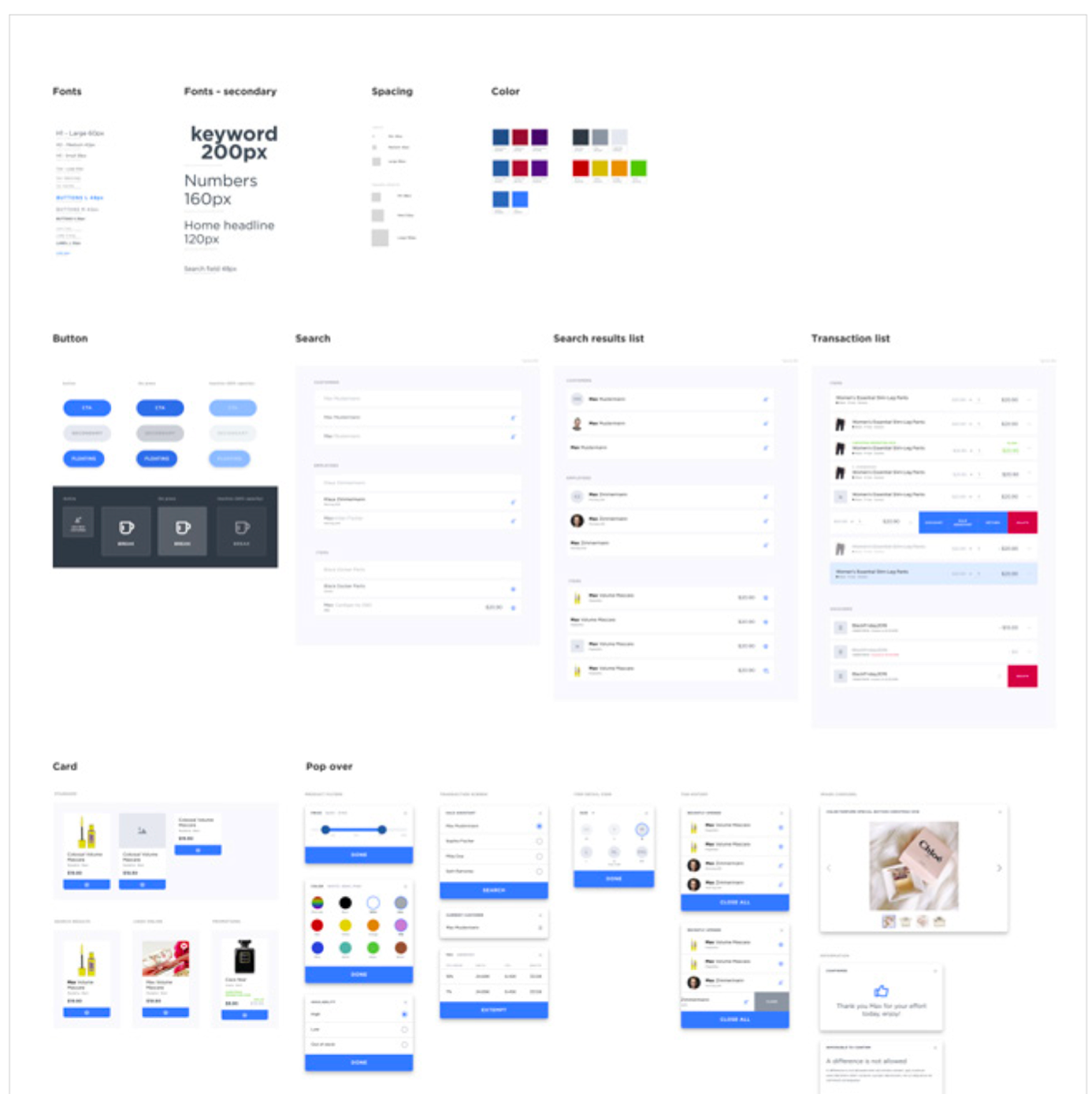
Spanning all three product contexts, a set of UI and brand-related UX guidelines was developed to ensure cross-platform consistency. The goal was a coherent product family — where a user moving from the store app to a cashier terminal to a gas station interface would encounter the same underlying design logic, even as the surface adapted to each environment.