Background
Air Quality Is Invisible. We Made It Legible.
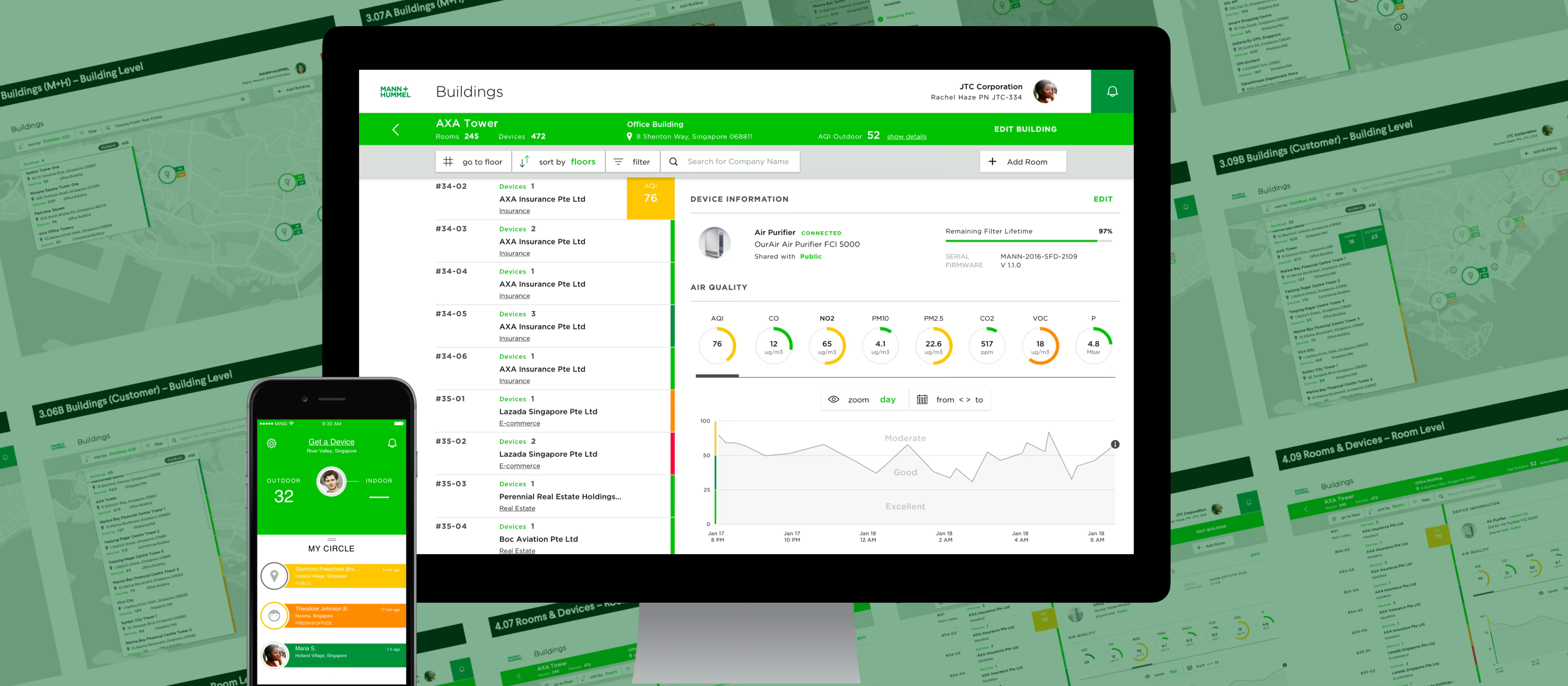
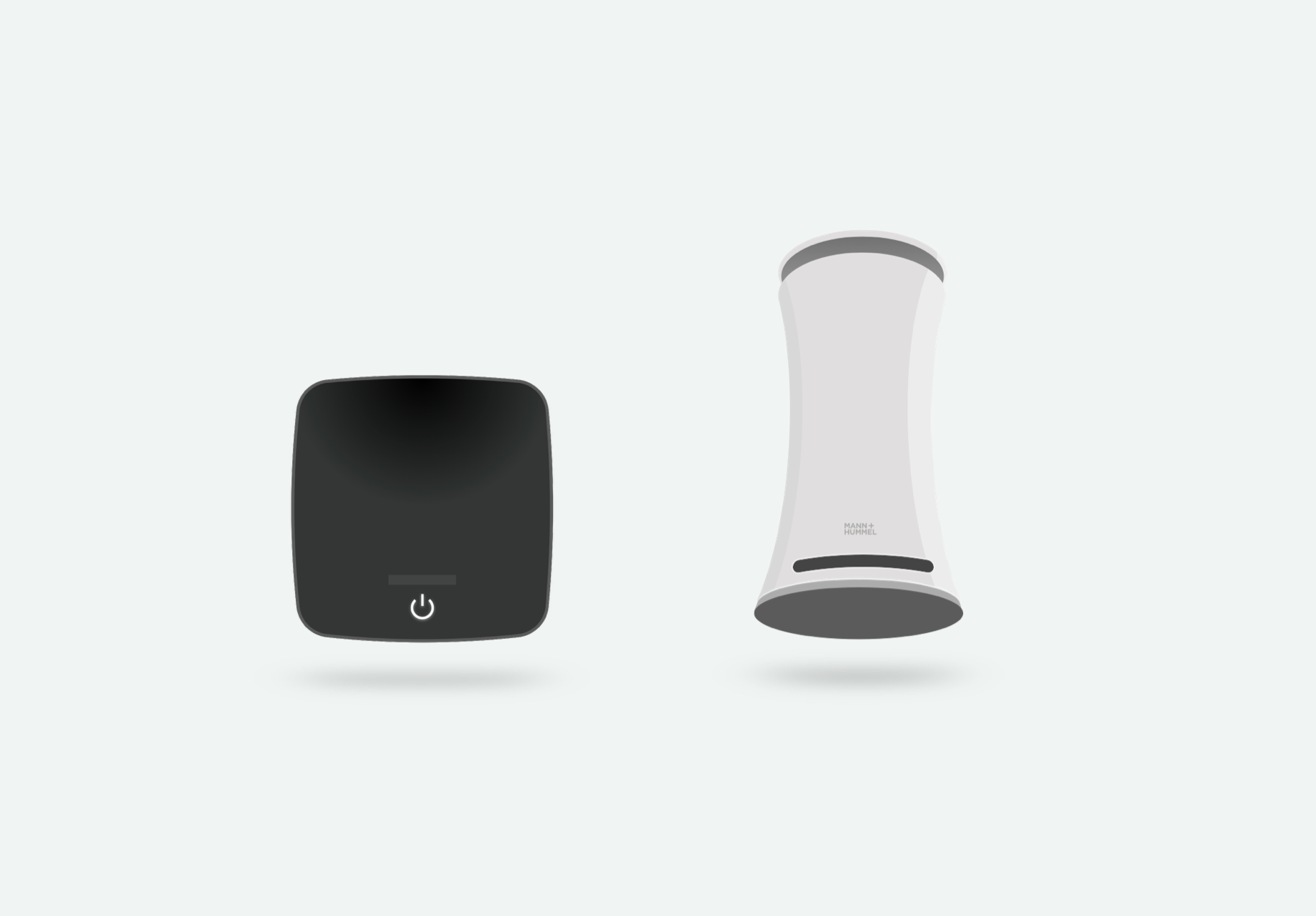
Mann + Hummel — a global leader in filtration technology — had the sensor technology to measure air quality with precision. What they didn't have was a way to make that data useful to the people who needed it. The challenge was threefold: give individuals a meaningful, location-aware view of the air around them; provide businesses with a portal for monitoring and managing building air health; and create an insurance layer with AXA that could connect air quality data to health and property products.
The design problem was not the data — it was the vast difference in what three completely different user groups needed to do with it.
Three Users. Three Contexts.
One Experience System For All Of Them.
Consumer
Personal awareness
Location-aware air quality data, personal health context, and real-time alerts. Mobile-first, designed for non-technical users who want to understand their environment without effort.
Business
Building management
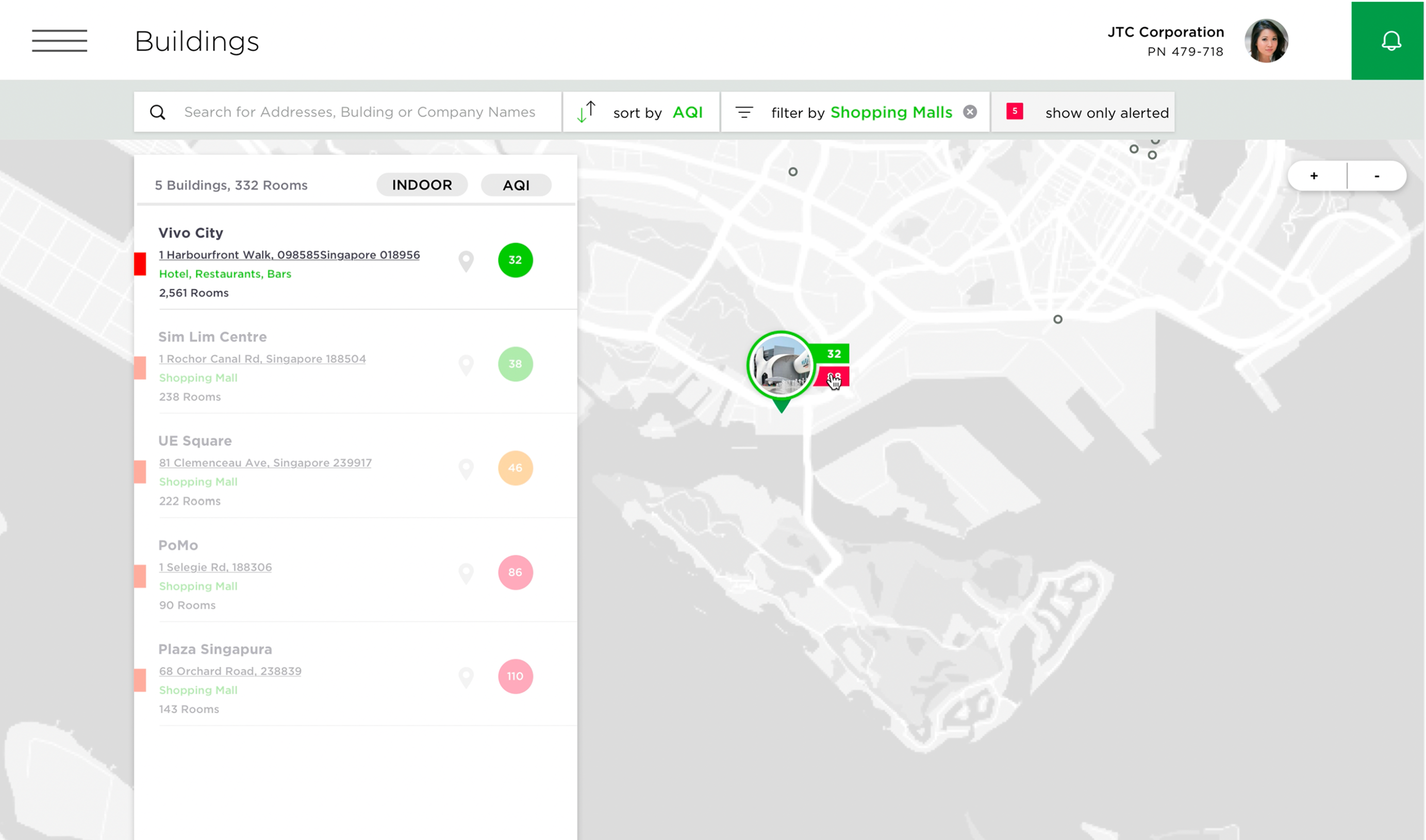
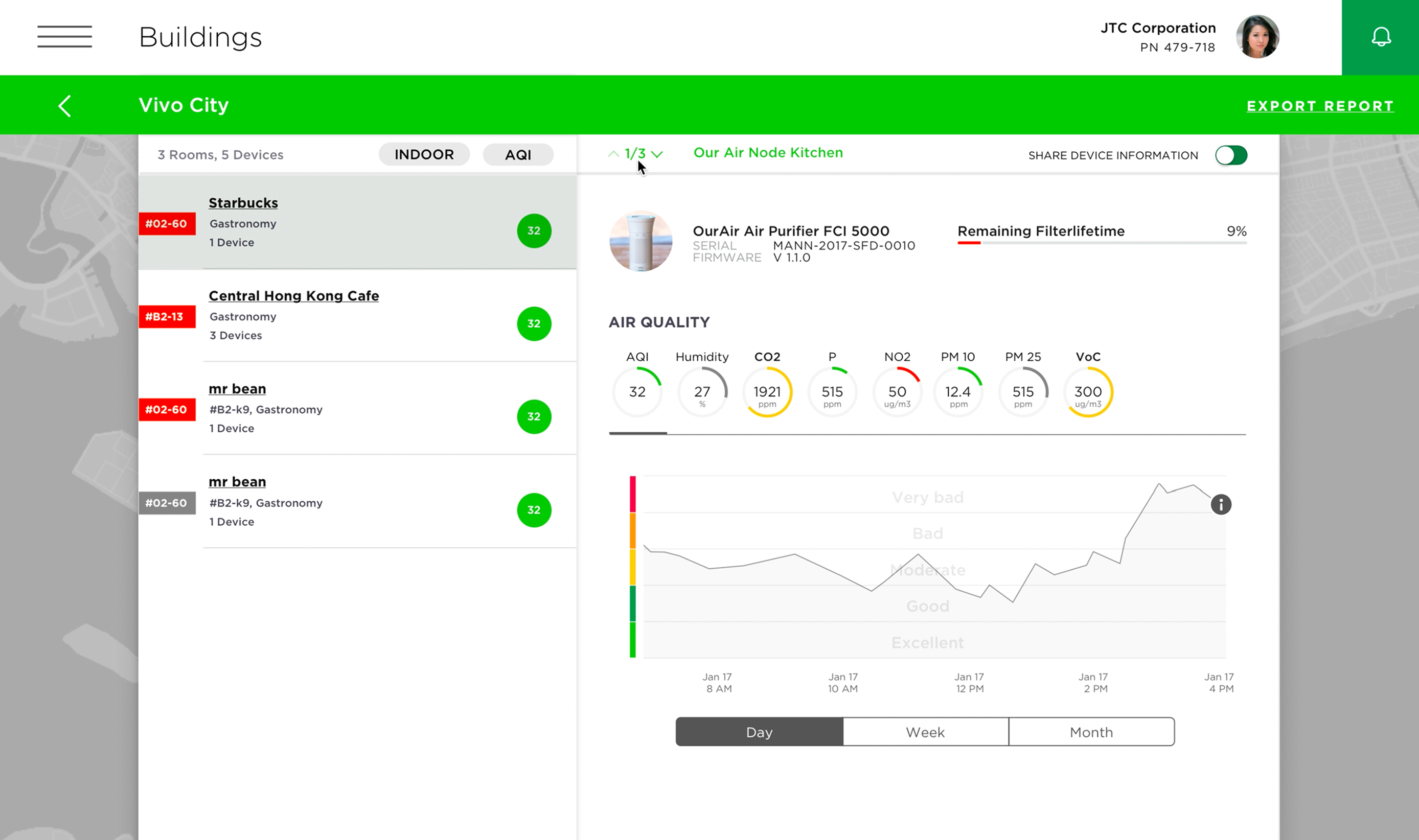
Multi-building portfolio management across a hierarchy of buildings, floors, rooms, and devices. Filtration scheduling, compliance reporting, and asset status — for facility managers without a technical background.
Insurance
Policy intelligence
Aggregated air quality data connected to property and health insurance contexts. AXA-integrated portal providing the evidence layer needed to quantify and act on environmental risk.
Multi-screen app flow — onboarding, dashboard, and location-based air quality monitoring across iOS and Android.
OurAir was one of the most conceptually complex products I've worked on — not because of its technical scope, but because of the radical differences in how three user groups needed to interact with the same underlying data. A consumer wants a feeling. A facility manager wants a number. An insurer wants evidence.
The design discipline was in finding the shared information architecture that could support all three without compromising any of them — and ensuring the cross-platform consistency was tight enough that users operating in both the consumer and professional contexts never had to relearn conventions.