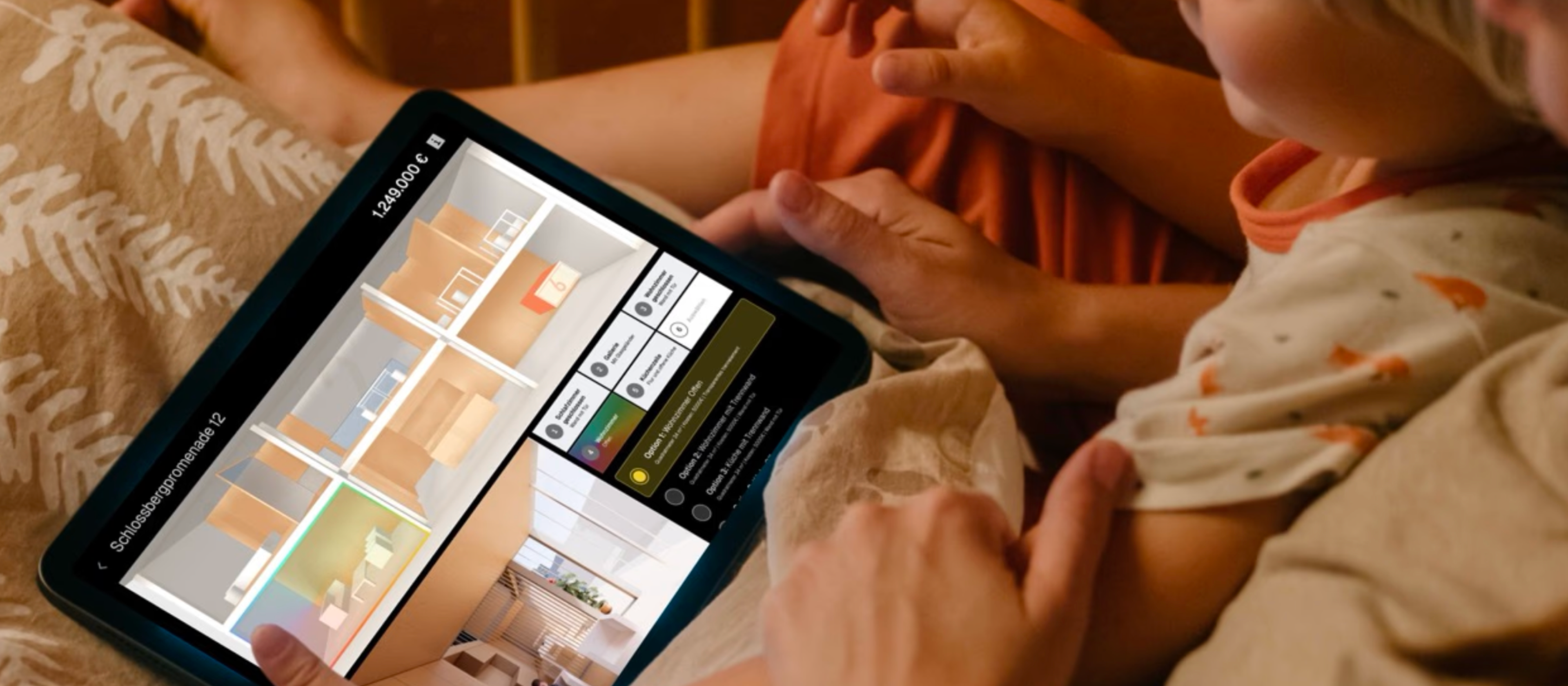
Social Housing Platform
Glasshome is a community matchmaking platform — connecting people to each other and to neighbourhood projects they actually want to live in. As Co-Founder and CEO, I led the full design practice: product vision, brand, UX, architecture, and investor narrative.
The Premise
The housing industry has optimised for cost-per-square-metre. It has almost completely neglected what actually makes a place worth living in: the people around you. Glasshome was built to fix that — to match residents to communities before they move, based on values, lifestyle, and vision for the future.
This is a genuine 0-to-1 product. No template, no playbook, no prior product to inherit. Every component — brand, platform, architecture, investor deck, AI logic — was designed from scratch while simultaneously running a company.
Find your community
before you find your house.
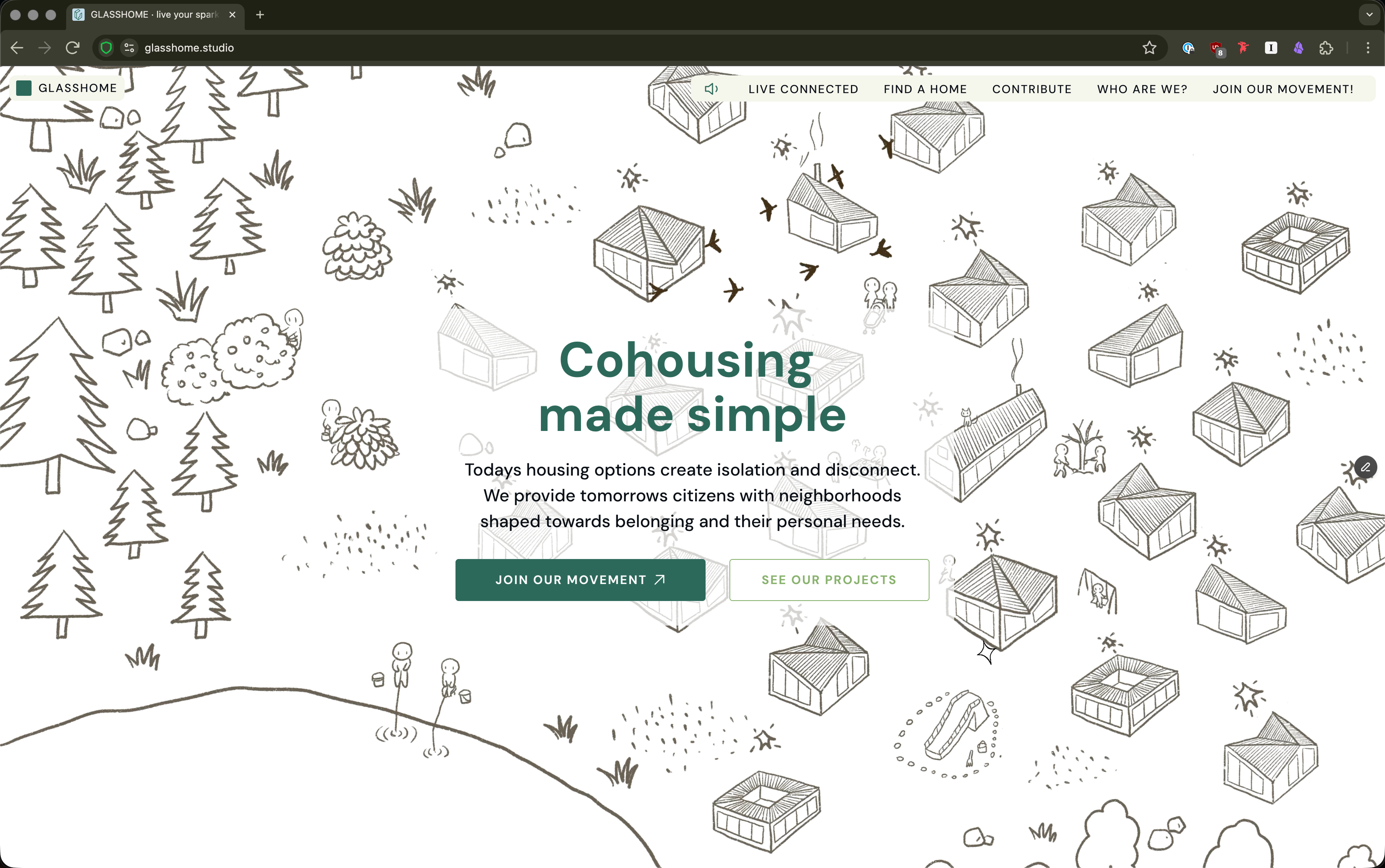
The Glasshome website had to do something unusually hard: introduce a concept that doesn't exist yet. No comparable product to reference. No shortcut to understanding.
The site was designed to move visitors from confusion to curiosity to conviction — using story-led copy, a distinct visual language, and a clear call to action for both prospective residents and neighbourhood developers.
The Konfigurator is the entry point to Glasshome's resident journey — a research-based tool that helps users articulate what kind of community they want to live in, before they've even seen a listing.
Questions are drawn from qualitative research into how people relate to shared spaces, neighbours, and neighbourhood identity. The output seeds the AI matchmaking engine and shapes what projects get surfaced to each user.
Glasshome's AI layer does two things in parallel: it matches residents to each other based on values and lifestyle profiles, and it matches them to neighbourhood projects that fit their vision of community living.
Users see a similarity score against each listed neighbourhood concept. Residents apply either as future residents or as community founders — giving the platform a dual-sided community formation model. The AI surfaces alignment, not algorithms.
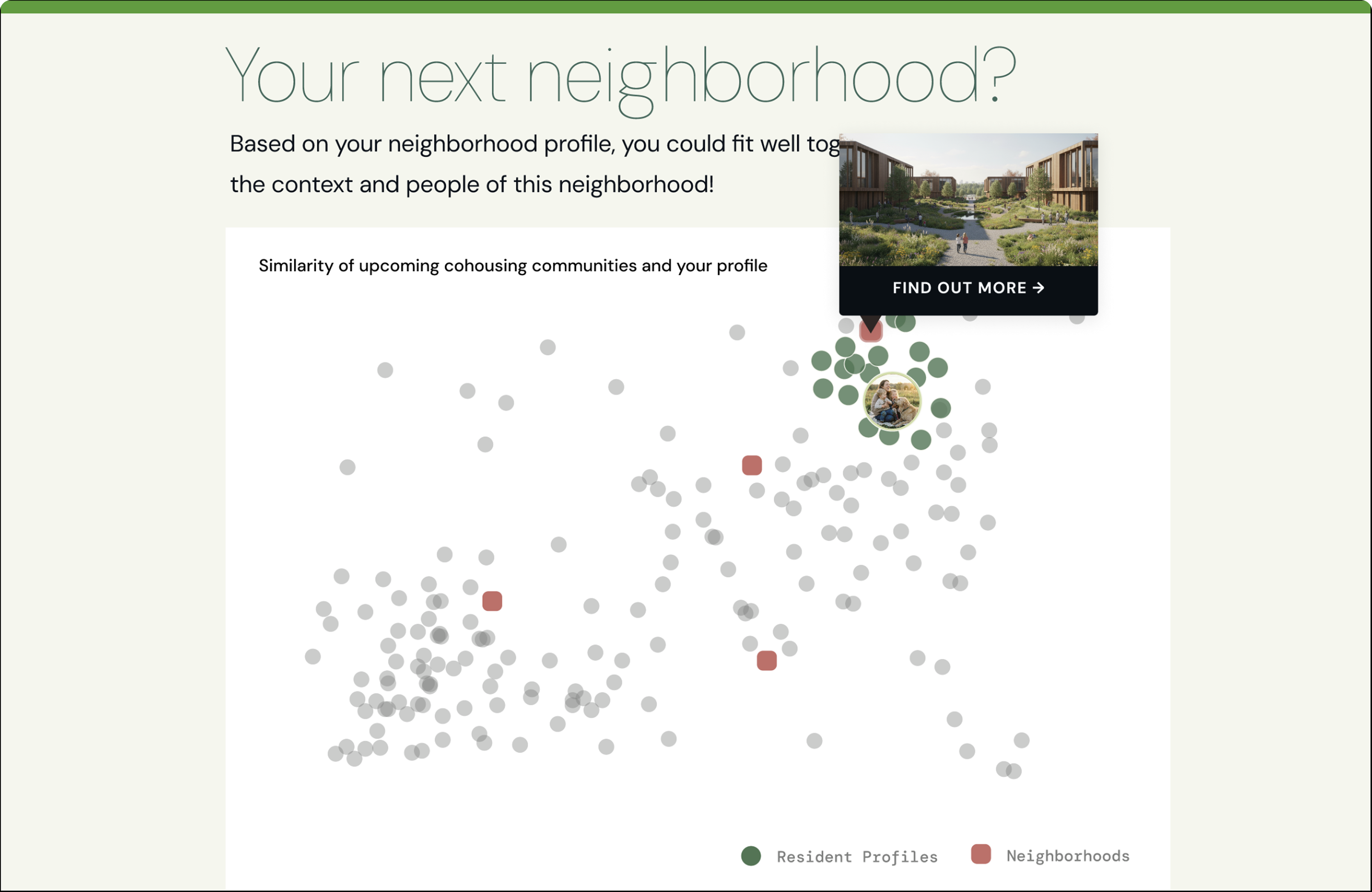
Not an algorithm — a mirror.
What kind of community are you?
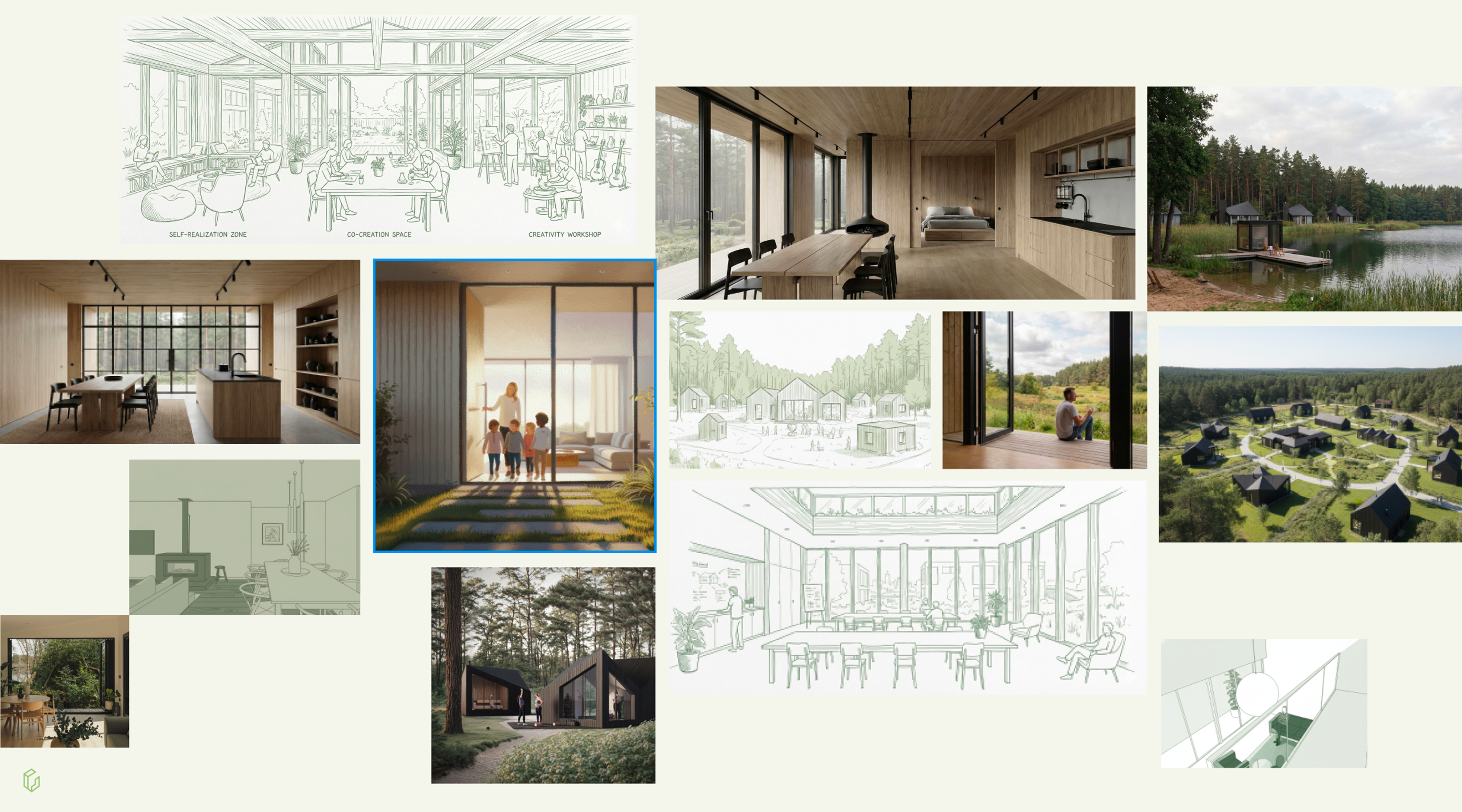
Pitch design is product design under different constraints. Every slide had to do double work: tell a story and make a business case. The deck was designed to move investors from "interesting concept" to "compelling opportunity" — with visual clarity doing as much work as the words.
The Glasshome deck won invitations to accelerator programmes and formed the basis of early-stage partnership conversations with municipal housing bodies across Sweden and Germany.
Before any screen was designed, the information architecture had to be established. Glasshome is a dual-sided platform — residents and neighbourhood project founders each have distinct journeys, distinct mental models, and distinct goals.
The IA work mapped both journeys end-to-end, identified the touchpoints where the two sides interact, and defined the product boundaries for the MVP. Getting the architecture right was what made the rest of the design work tractable.
.png)
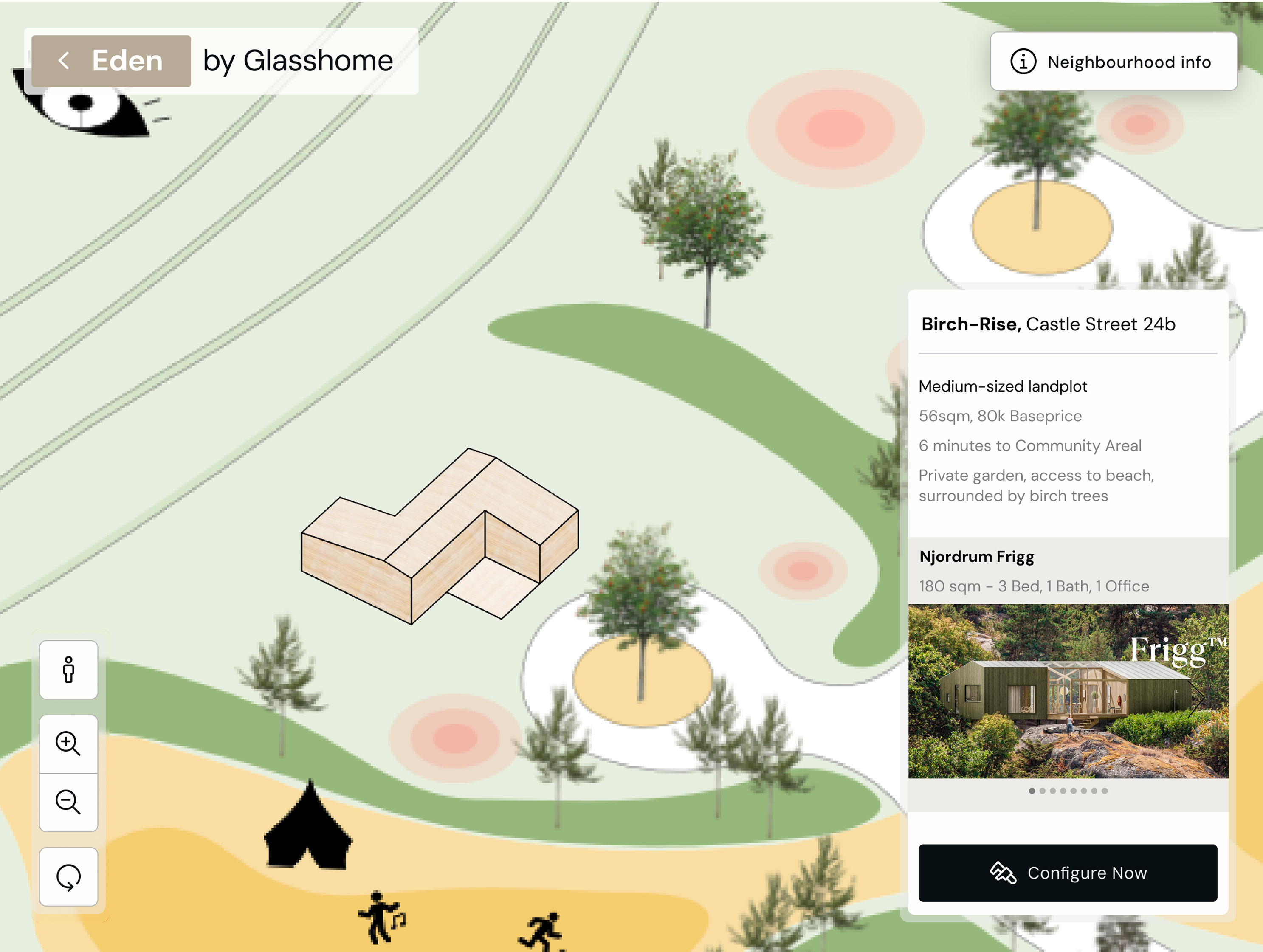
The village configurator is a different tool to the general Konfigurator — it lives at a later stage in the customer journey, when a specific neighbourhood concept has been identified and a founding group is forming around it.
It lets future residents collaboratively shape the practical and social parameters of the village: shared amenity mix, governance model, community norms. Designed specifically for the first real Glasshome village project, it was the moment the platform went from product concept to tangible community formation.
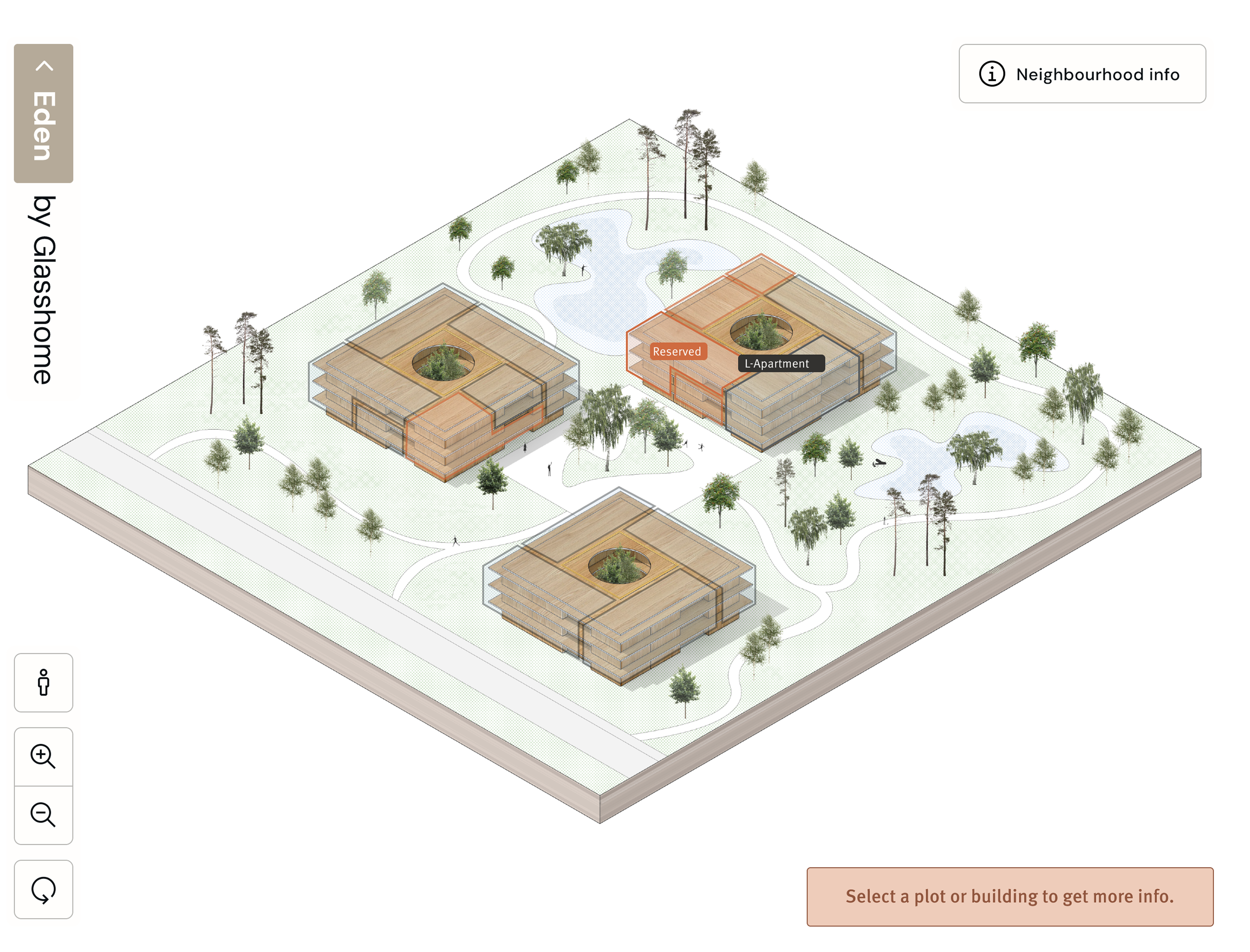
Apartment Buildings
Konfigurator overview of apartment building options
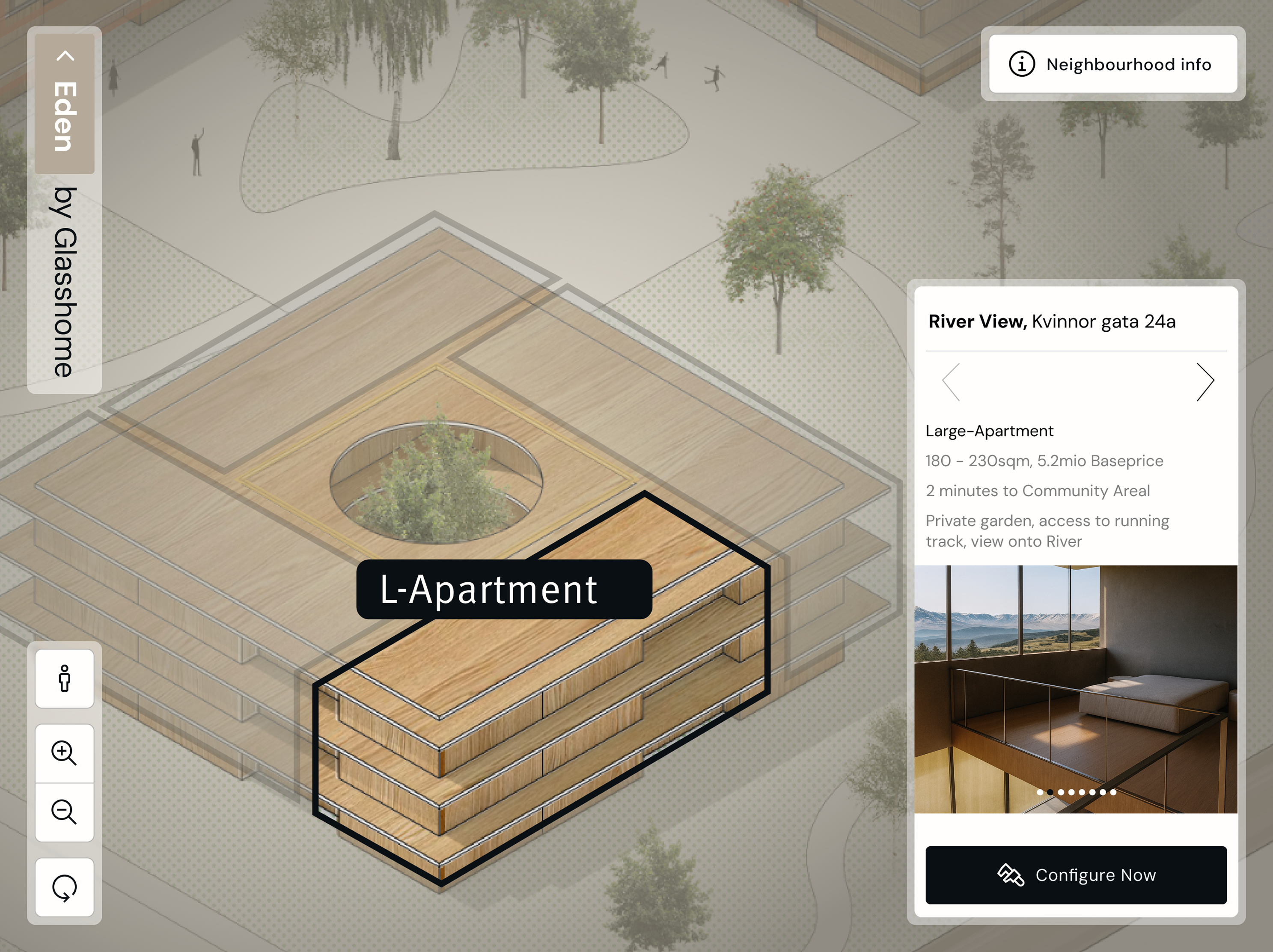
Building Details
Detailed configuration of apartment building parameters
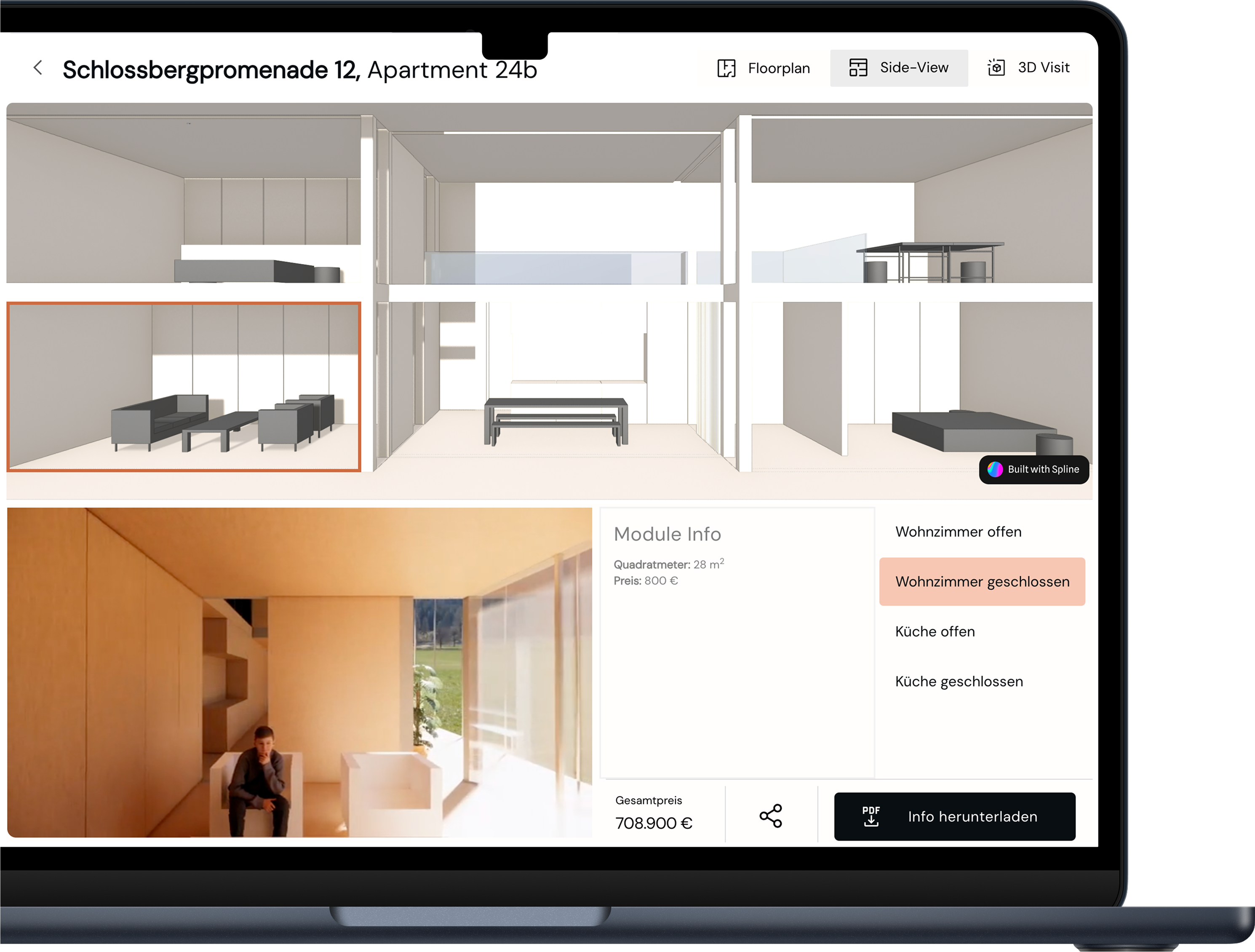
Apartment Details
Individual apartment configuration and community matching
07 — Business
What We Built
A community matchmaking platform connecting prospective residents to each other and to neighbourhood projects — before they move. A new product category at the intersection of PropTech, social technology, and community development.
The Business Model
Revenue from neighbourhood project developers and municipalities who list their concepts on the platform. Community-as-a-Service — removing the single biggest unsolved risk in co-housing development: finding the right residents.
Market Traction
Early partnerships with housing developers in Sweden and Germany. Accelerator programme invitations. Active interest from municipalities exploring social sustainability in new residential developments.
My Role
Co-Founder and CEO — responsible for product vision, design practice, business strategy, investor relations, and go-to-market. Simultaneously the company's lead designer and chief executive across the full founding period.
08 — Status
Glasshome is a project I never fully let go of. The company isn't the primary focus right now — but the idea is too good and too important to shelve. Development continues on the side, at a slower pace, with intention. Some projects outlast their original timelines because the problem they're solving hasn't gone away.
Impact & Scope
Platform Scope
0 → 1
Brand, product, AI matchmaking, dual-sided platform architecture, pitch deck — all designed from a blank page.
My Role
CEO
Simultaneously Co-Founder, CEO, and Lead Designer — a rare combination that shaped every design and business decision.
Project Status
Live
Ongoing — continuing as a side project with active development. The problem is still unsolved and the vision is still intact.
Glasshome is the project where design and leadership became inseparable. Every decision had to work at both levels simultaneously: Does it make the product better? Does it move the company forward? The two questions rarely have the same answer, and learning to navigate that tension is the most transferable skill I've built.
The platform is still evolving. The problem it solves — that people have almost no way to shape who they'll live next to before they commit to a home — hasn't been solved by anyone yet.